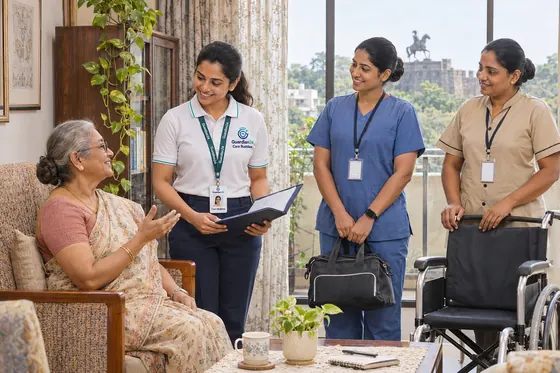
A Care Buddy (non-medical companion)
Goes with you, or acts for you, on practical tasks: hospital visits, journeys, medicine collection, paperwork, bank or government office visits, errands and regular check-ins. A Buddy coordinates and accompanies, but does not give medical care.
A nurse
A qualified professional for clinical care, such as giving injections or medication, wound care or monitoring a condition. Choose a nurse when the need is medical.
An attendant or caregiver
Helps with personal care at home, such as bathing, toileting, dressing or moving someone safely. This is hands-on care that a Care Buddy does not provide.
A physiotherapist
Helps with mobility, strength and recovery after an illness, fall or operation, usually through a planned course of sessions.
Using them together
Many families combine them. For example, after a hospital stay a Care Buddy can help arrange nurse or physiotherapy visits, equipment and home preparation, while the professionals provide the clinical care. In an emergency, always call 112.
Not an emergency service. Care Buddies is planned support. In an emergency, call 112.